China's gold guzzling
June wasn't a good month for speculative buyers of gold - the price started the month around $4,500/oz, but ended it clinging onto $4,000/oz. A drop of more than 11% was bad for many. But some key players saw this as a dip and used it to gobble up more gold.
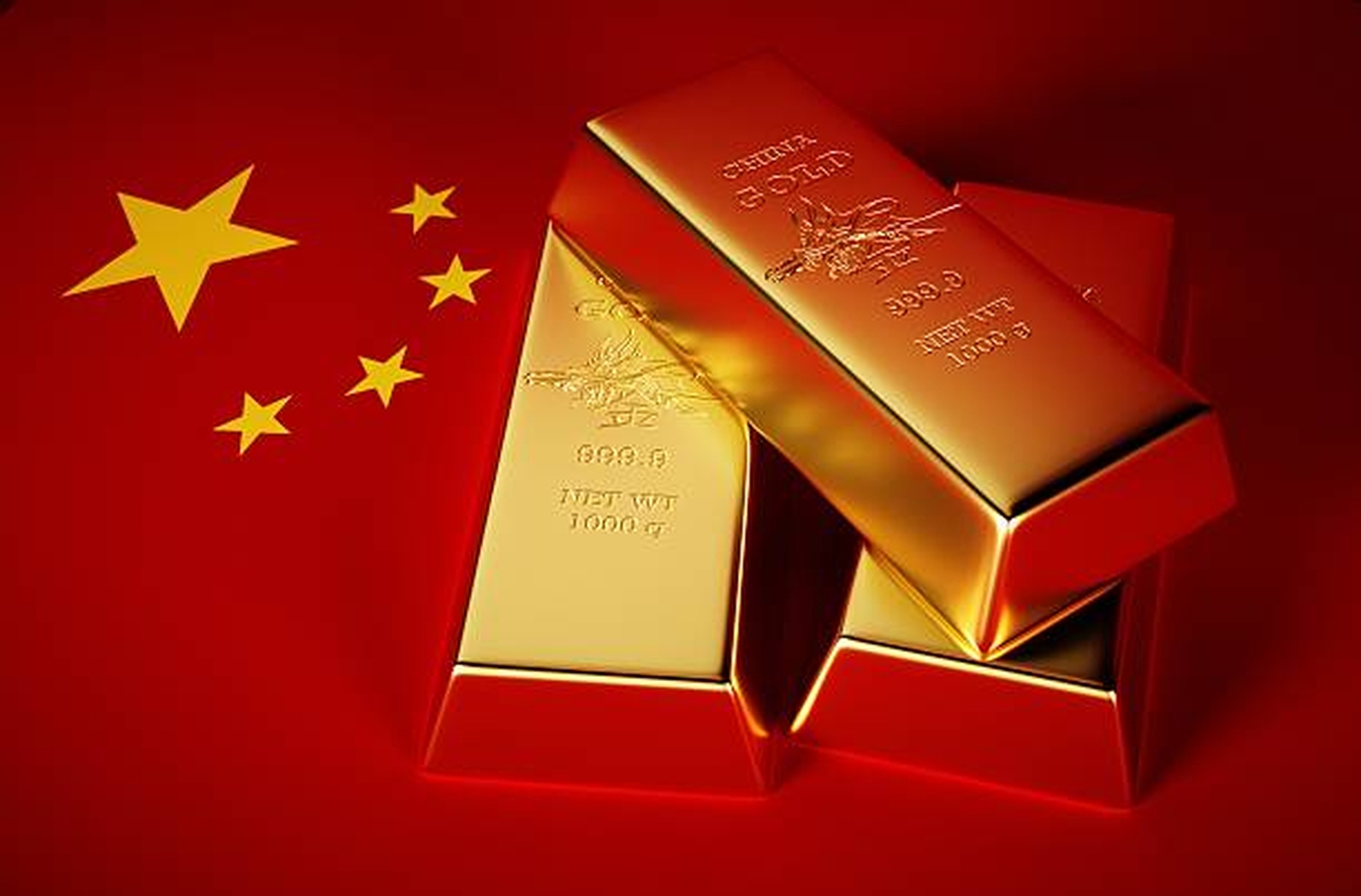
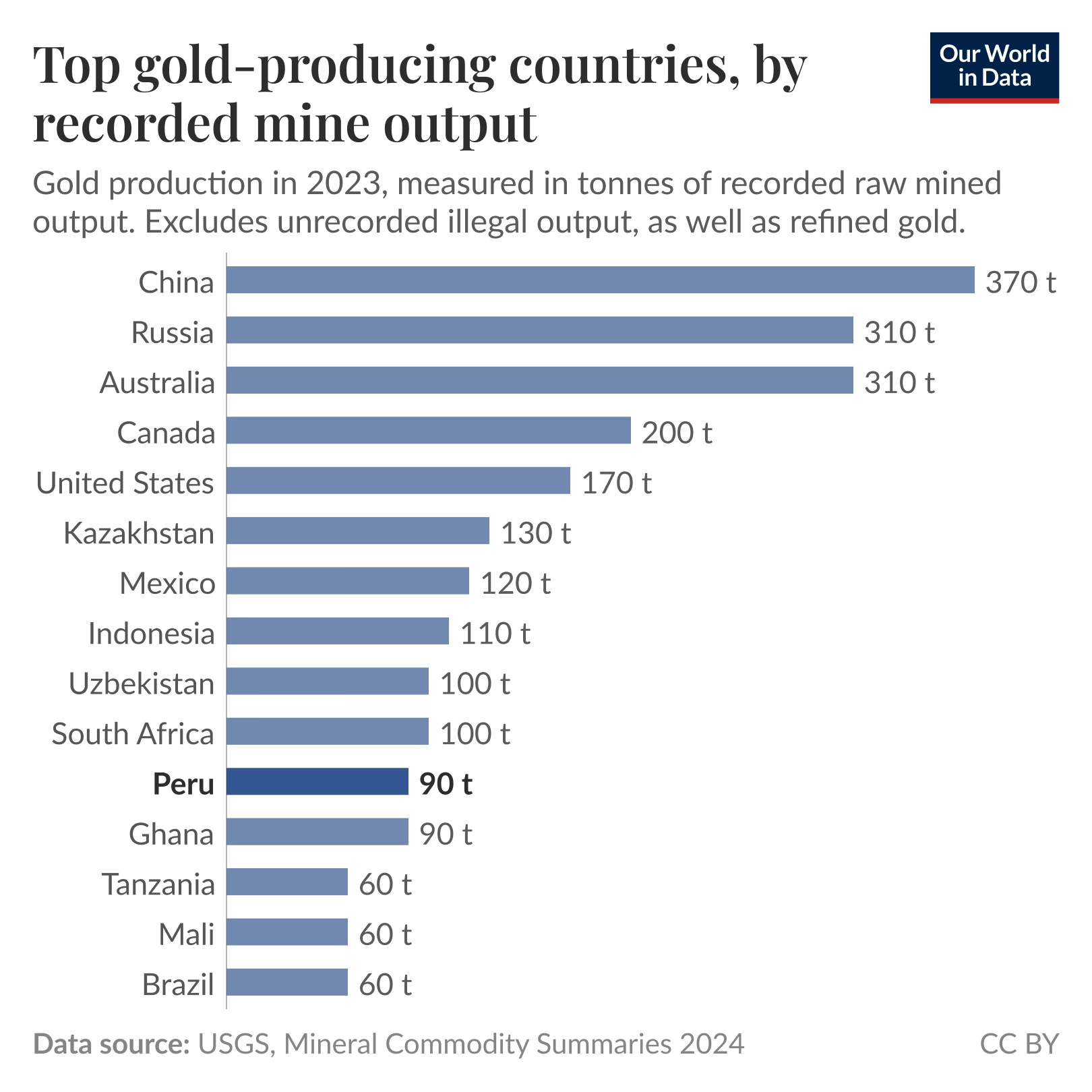
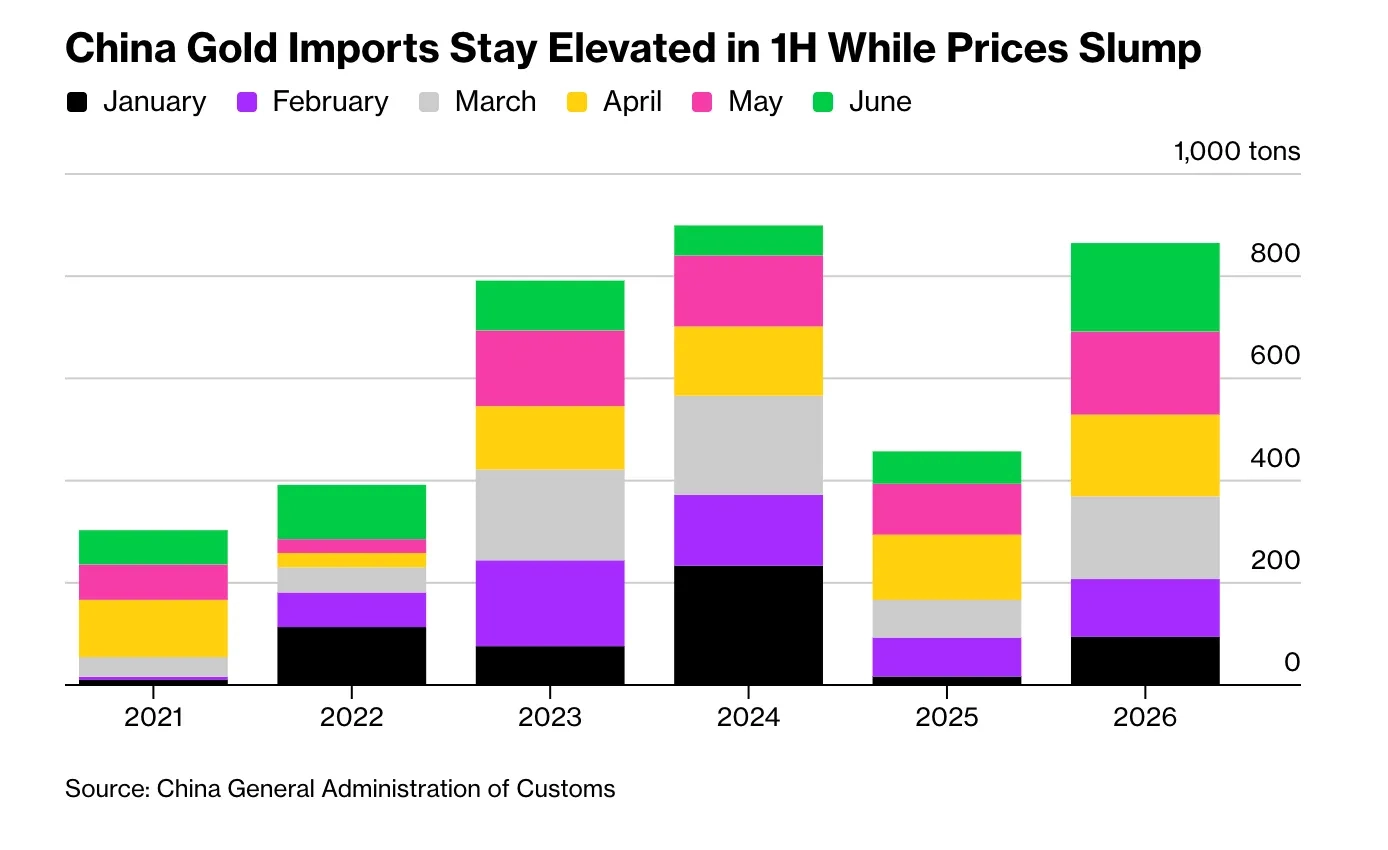
A hefty chunk was guzzled by China. It may be the world's biggest gold producer - annual mine production of some 380 tonnes - but that doesn't stop it importing plenty of gold, especially when the international price has dropped. China imported more than 173 tonnes of gold in June, according to Chinese customs data.
And in the first half of 2026, as the Dollar gold price slipped by 8%, China imported almost 865 tonnes, 89% more than its gold imports in the first half of last year. Acknowledged as a country where long-term strategic thinking is highly valued, what's driving China's insatiable gold urge?
Secrecy
Partly the increased imports reflected the fact that the Chinese currency was stronger, appreciating by about 3% against the Dollar. That made imported gold cheaper. It also had strong export earnings and a good trade surplus during the first half of this year. So while importing gold was more cost-effective, that doesn't really explain why China is buying so much gold.
The trouble is, no-one can be sure how much gold the People's Bank of China (PBoC) - the central bank - actually has. June marked the 20th consecutive month in which it bought gold, although it was relatively small, compared to overall imports, almost 15 tonnes.
How much gold the PBoC has is not so much a state secret, more an information gap that China's government seems uninterested in closing. While there is customs data on imports from both China and Hong Kong, and the Shangai Gold Exchange publishes withdrawal data - seen as a proxy for physical delivery into the domestic market - data from the PBoC seriously lags behind import figures.
The PBoC officially holds about 2,346 tonnes, but many analysts speculate that it actually has oodles more, anything between 5,500 and 30,000 tonnes. But only the PBoC really knows how much, and it isn't saying.
The dip
Xi Jinping has said that China needs to create "a strong currency, which is widely used in international trade and foreign exchange markets, and has the status of a global reserve currency." He said this in the official theoretical journal of the Chinese Communist Party (CCP). It's difficult to imagine a more authoritative statement.
All this buying has given rise to conjecture that China is planning a gold-backed Yuan, and that China is adeptly using the lower international gold price to buy. But this too is speculation. Accumulating the total tonnage needed for that would mean China would have to acquire around 20% of all the gold ever mined. Were this to become more than a fantasy the buying required would drive the gold price astonishingly high. May that's why the PBoC maintains its tight lips, so it can buy gold when it's less expensive?
The Glint Strategy
In one sense it doesn't matter whether China wants a gold-backed Yuan or not.
At a time when enormous government debt burdens have become commonplace, the choice those governments must make is disheartening and will damage the value of what you have.
They can either cut spending; raise taxes; default; or permit inflation to reduce the real value of what they owe. The choice between those equally catastrophic 'solutions' is fast approaching.
That explains the Glint strategy, which is similar to China's approach to gold (as far as it can be understood). The US national debt will be $40 trillion in October. Fiat currencies, paper money, is running against a tsunami of debt. Gold is free from government interference. China may be just accumulating gold as a defensive strategy - or it may have a hidden grand plan.
Whether you want to use your gold as money, or you wish simply to build it up as a defense against fiat's declining purchasing power, it makes sense for you too to hold gold, as much as you can. You can''t know what China is up to, but it's clearly something.
For UK clients: At Glint, we make every effort to demonstrate a balanced conversation between gold, silver, crypto and fiat currencies when it comes to purchasing power and, while we strongly believe that gold is the fairest and most reliable currency on the planet, we need to point out that it isn’t 100% risk free. While we have seen a steady increase over time, the value of gold can fall, which means that its purchasing power can also decline.
For US clients: Graphic representations of value are for illustrative purposes only. The Glint debt card is issued by Sutton Bank, member FDIC. The sale, purchase and storage of precious metals are offered by Glint and not Sutton Bank. Your investment in precious metals through Glint is
· Not insured by the FDIC.
· Not a deposit or other obligation of, or guaranteed by, Sutton Bank.
· Subject to investment risks, including the possible risk of loss of the principal amount invested.
All investments involve risk, including possible loss of principal. The value of precious metals is affected by many economic factors, including but not limited to the current market price, demand, perceived scarcity, and quality of the precious metal. Precious metals can increase or decrease in value. Past performance is not a guarantee of future results. As such, investing in precious metals may not be suitable for everyone.