How much is there?
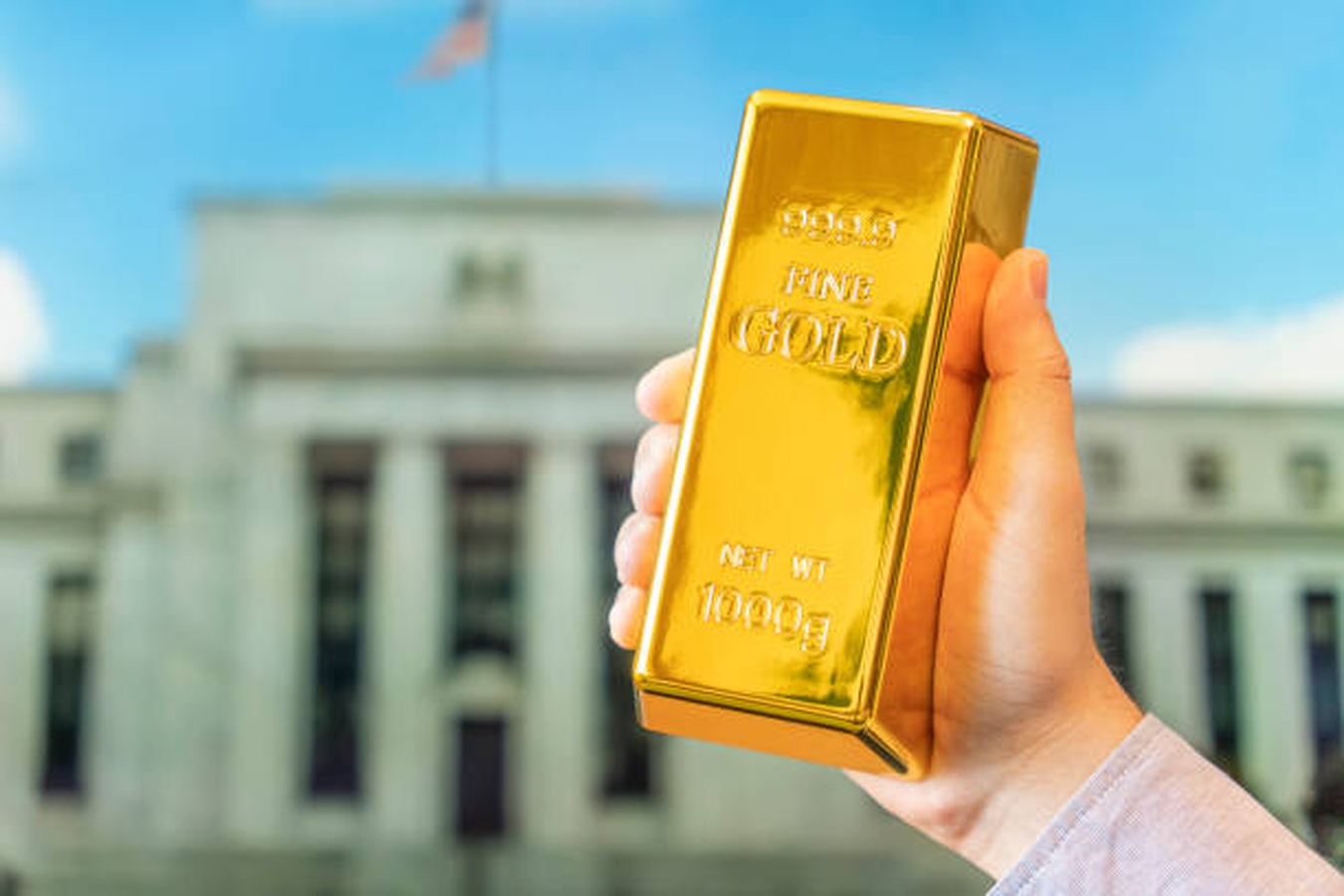
While governments can always print more paper money if their reserves seem in danger of running dry, the gold supply has no overall commander-in-chief. Total global gold supply rose to 5,002.3 tonnes in 2025, the first time it exceeded 5,000 tonnes. Gold mine production rose by just 1%, reaching a record high of 3,672 tonnes. So more than 1,330 tonnes came from recycled gold - people selling their gold when the price surged by about 68% between 1 January 2025 and 1 January this year. Gold mine production appears to be stagnant.
The US Geological Survey (USGS) estimates that there are some 64,000 tonnes of gold in the ground as "economically mineable reserves". More than twice that number are "resources" - deposits known to exist but which are not economic to mine.
Why is mine production apparently impervious to the recent high price? For one thing, the World Gold Council (WGC) suggests that mine production lags the gold price by "at least six years". It costs at least $1 billion to start a new gold mine - much more if the project is in a remote and difficult location. New projects are becoming increasingly difficult to find, and permits for their construction do not happen swiftly. Capital expenditure at the start of a venture can be huge - and that's before a single cent is earned. Once a mine is started it typically takes another 10 to 15 years before it actually starts producing gold.
One important measure for mining companies is the AISC, the all-in sustaining cost, covering labor, energy and general administration. Last year a gold miner's average AISC was $1,521 an ounce, when the gold price averaged around $3,431 an ounce according to the WGC. That suggests mines (on average) had a margin of $1,910 per ounce.
Geography matters
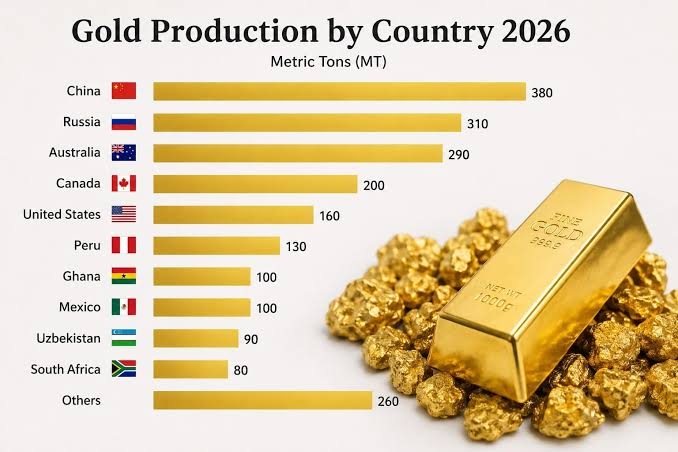
The WGC says annual mine gold production has risen only marginally in the past 20 years. It adds that "gold mining production may be nearing its peak." It's becoming more difficult (and therefore more expensive) to find reserves. Mining companies may be enjoying the higher price but the costs of new projects have risen and the average AISC is unlikely to drop.
Not only that, but production has shifted its geographical basis. China beat South Africa in 2007 to become the world's biggest gold producer. Russia displaced Australia from the number 2 slot in 2019. In 1995 Australia, Canada, the US and South Africa accounted for 56% of annual gold production. That was down to 24% in 2020. Last year those countries produced less than 20% of global mine supply.
That trend is likely to continue. The ideological opponents of the US will remain the world's biggest gold producers.
Does this matter?
The shift from Western-inclined gold production is incremental, so it is like the lobster being dropped into cold water that's being heated to cook it. Barely noticeable.
Yet it does matter if we consider the possibility that states may decree that their gold is no longer tradable. That it is entirely under state control. That would mean not just a spike in the gold price and an incentive for smuggling. It would also mean that the 218,000 (or so) tonnes of above-ground stock would become intensely struggled over.
It doesn't really matter that annual mine production is barely increasing; the above-ground stock, around 60 times bigger than annual mine output, is currently tradable so anyone is able to buy or sell.
Some of that stock could soon prove to be in great demand. With the US national debt heading for $40 trillion by September and the US Treasury now spending $3 billion a day on interest payments on that debt, the US is rapidly approaching a crisis. 20% of Americans receive Social Security payments; the Peterson Foundation warns that on the current trajectory recipients could see a 22% cut in benefits by 2032.
If the US administration decided the fiscal constraints it faces pose a serious challenge to its stability it might try to raise more revenue through taxes; it might decide to cut its spending; or it could instruct the Federal Reserve to print more fiat currency. None of those would prove popular with the electorate.
Whatever happens, holding gold - especially gold with Glint, when it can be used as money - is a defense against the declining value of paper money. It's a defense against uncertainty.
For UK clients: At Glint, we make every effort to demonstrate a balanced conversation between gold, silver, crypto and fiat currencies when it comes to purchasing power and, while we strongly believe that gold is the fairest and most reliable currency on the planet, we need to point out that it isn’t 100% risk free. While we have seen a steady increase over time, the value of gold can fall, which means that its purchasing power can also decline.
For US clients: Graphic representations of value are for illustrative purposes only. The Glint debt card is issued by Sutton Bank, member FDIC. The sale, purchase and storage of precious metals are offered by Glint and not Sutton Bank. Your investment in precious metals through Glint is
· Not insured by the FDIC.
· Not a deposit or other obligation of, or guaranteed by, Sutton Bank.
· Subject to investment risks, including the possible risk of loss of the principal amount invested.
All investments involve risk, including possible loss of principal. The value of precious metals is affected by many economic factors, including but not limited to the current market price, demand, perceived scarcity, and quality of the precious metal. Precious metals can increase or decrease in value. Past performance is not a guarantee of future results. As such, investing in precious metals may not be suitable for everyone.