Nine-tenths of the law
Why the cost of physical gold varies based on its location, form, and current market conditions.
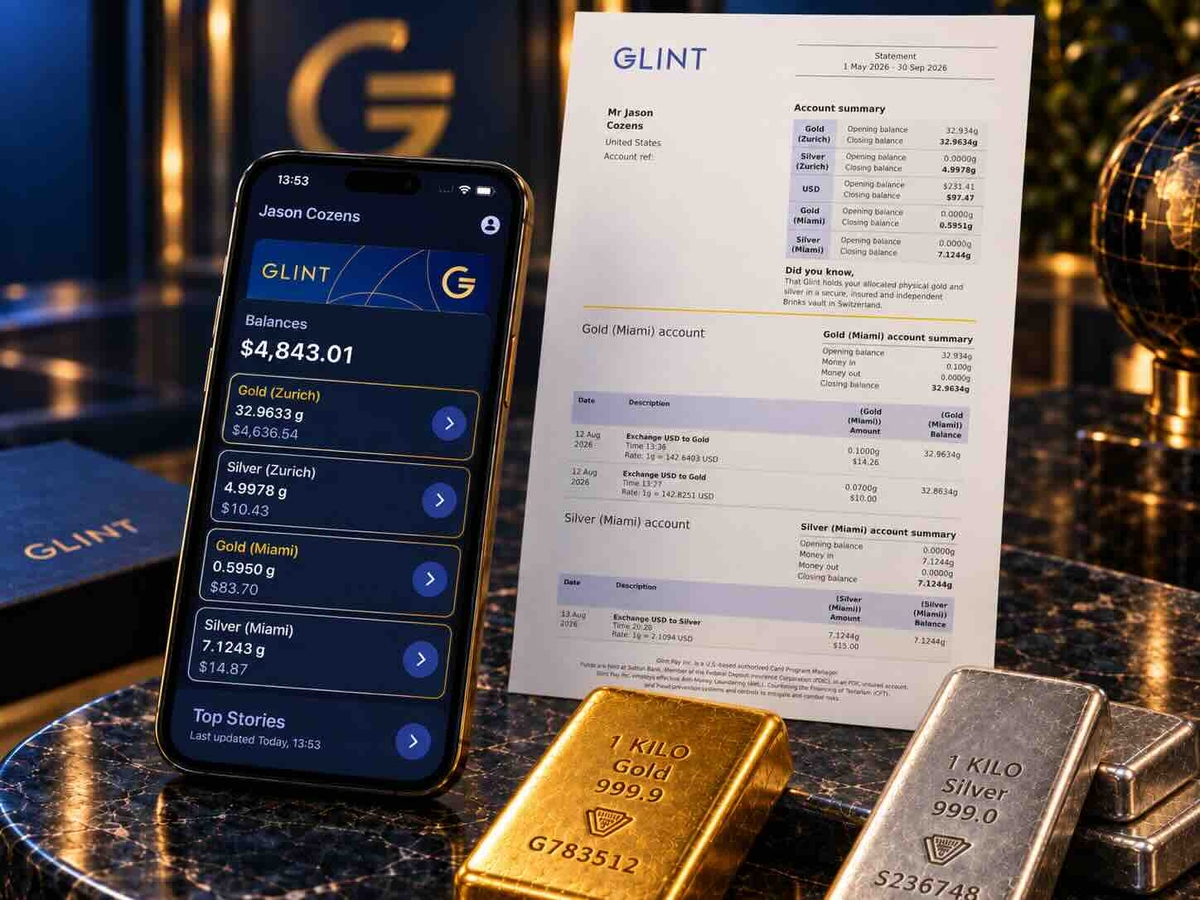
"Possession is nine-tenths of the law" is not a law. Simply it means if you hold something then your right to keep that thing is easier to maintain. That's partly why allocated gold is better than unallocated gold. Allocated gold means the gold is legally your property, you own it - your investment is protected even if its custodian goes bust. With Glint, every bit of gold you buy is allocated gold, no one else can own or use it.
Ownership of gold is becoming increasingly tested in today's chaotic world. Last week the central bank of the Netherlands relocated about 86 tonnes of its gold from Canada and the US to London's Bank of England (BoE) vaults, "in view of increasing geopolitical unrest" it said. This follows a similar decision by the French central bank, which earlier this year removed the final 5% of its gold held in the US. All of the French central bank's 2436.8 tonnes now sit 27 meters below its head office in Paris.
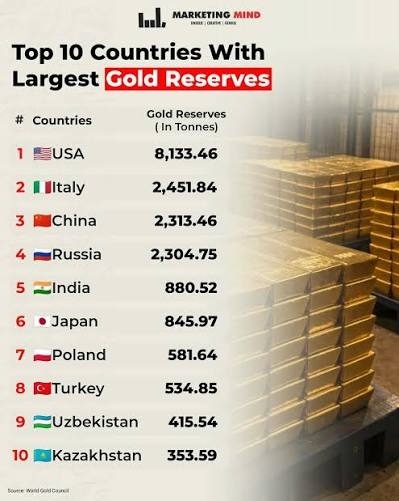
This trend is relatively new. Germany repatriated 300 tonnes from New York and 374 tonnes from Paris between 2013 and 2017. And the US has not lost any money through this gold repatriation. What it has lost is perhaps even more valuable than fiat money; it's lost its trusted position as anchor of the international monetary system. Gold custody was once a measure of alliance. Today gold held in a foreign central bank is seen more as a liability, an unnecessary additional risk.
Safekeeping?
Gold repatriation seems like a new phenomenon. Seeking a safer place to deposit gold has a long history though.
Most of Europe's gold was moved to America's Federal Reserve or London's BoE in the Second World War, safely beyond Nazi Germany's occupying control.
France managed to send overseas almost its whole 2,500 tonne prewar gold reserve. After the war however, the Tripartite Gold Commission (made up of the US, the UK, and France) found it difficult to return much of Europe's shipped gold to its rightful owners. There were too many of them. The Commission wasn't formally wound up until 1998.
Sometimes the safekeeping is less than safe. Romania sent more than 120 tonnes of its central bank gold to Tsarist Russia in 1916 as German forces advanced. After the revolution the Bolsheviks took power they confiscated the gold, and cut ties with Romania. That gold has never been returned.
More recently central banks have taken note of what's happened to Venezuela's gold. Venezuela wants its 31 tonnes of gold back from the BoE vaults, where it has been held since 2018, despite lengthy legal deliberations. The gold was sequestered by the British government, which declined to recognize the country's revolutionary socialist government. Lawyers have made a fortune in this case.
What does the repatriation mean?
Bringing the gold home, to be under the control of its owner, is a simple solution. Trust has been under attack for a while now. The disappearance of trust is a profound problem. The American non-partisan think tank, the Pew Research Center, records the decline of trust in the country. The Reuters Institute said in June this year that public trust in the news globally has dropped three points this year; in the UK it is now just 30% - 20 points lower than ten years ago.
It doesn't matter why trust has declined, only that it has.
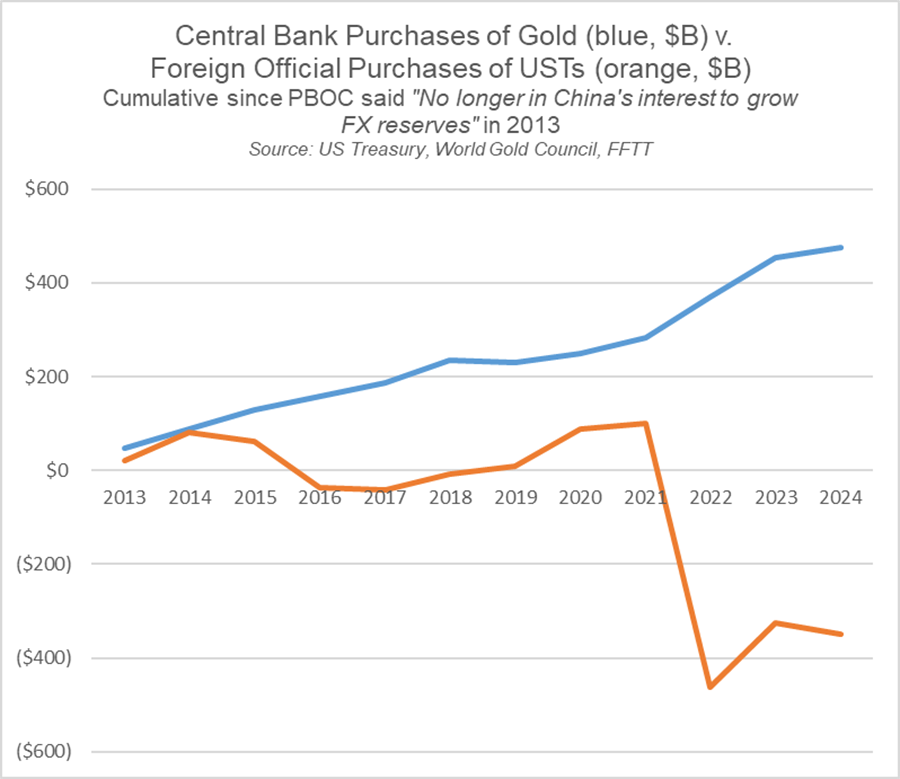
Central banks clearly are now embarked on holding and guarding their own gold. This scarcely perceived movement carries lessons for all of us.
Gold is invaluable as a safety device. Perhaps its most important strength is against inflation and the collapse of fiat money. Both the BoE and the European Central Bank have now warned that there is an "upside" to inflation.
But, as with central banks, it is important to be sure you really own the gold, that it is allocated to you. Most Exchange Traded Funds that offer gold only offer you unallocated gold. Which is as bit like trusting the custodian to let you use the gold as you wish, when serious crashes happen. You will be disappointed.
With Glint you know that the allocated gold you own is truly yours.
For UK clients: At Glint, we make every effort to demonstrate a balanced conversation between gold, silver, crypto and fiat currencies when it comes to purchasing power and, while we strongly believe that gold is the fairest and most reliable currency on the planet, we need to point out that it isn’t 100% risk free. While we have seen a steady increase over time, the value of gold can fall, which means that its purchasing power can also decline.
For US clients: Graphic representations of value are for illustrative purposes only. The Glint debt card is issued by Sutton Bank, member FDIC. The sale, purchase and storage of precious metals are offered by Glint and not Sutton Bank. Your investment in precious metals through Glint is
· Not insured by the FDIC.
· Not a deposit or other obligation of, or guaranteed by, Sutton Bank.
· Subject to investment risks, including the possible risk of loss of the principal amount invested.
All investments involve risk, including possible loss of principal. The value of precious metals is affected by many economic factors, including but not limited to the current market price, demand, perceived scarcity, and quality of the precious metal. Precious metals can increase or decrease in value. Past performance is not a guarantee of future results. As such, investing in precious metals may not be suitable for everyone.