Painful decisions ahead

Prices go up. They never seem to come down again.
Governments like reporting monthly price increases because the public - you and I - are kidded into thinking 'well, a few percent, that isn't going to worry me'.
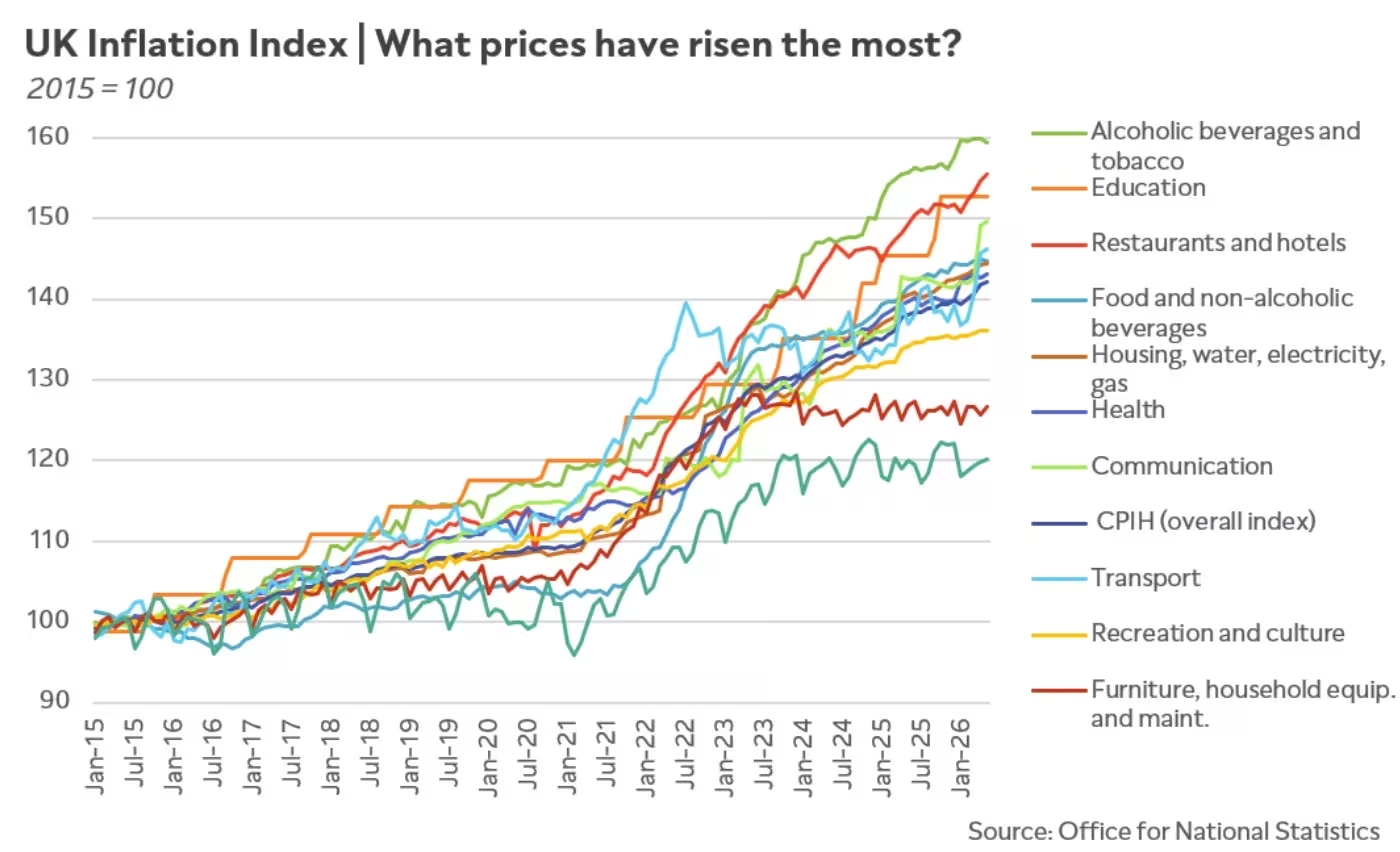
We've now learned that UK consumer price inflation (which excludes energy, food, alcohol and tobacco) in September was 3.1%. In July it was 2.9%. In August it was 3.1%. The biggest September rise was in motor fuel prices, which soared by almost 30% in the year.
At the cost of boring readers, we must remind them that the UK aims to contain inflation to 2%/year. The last time the country's central bank, the Bank of England (BoE), achieved that was May 2024, shortly before the general election that changed governments and brought the Labour Party into office.
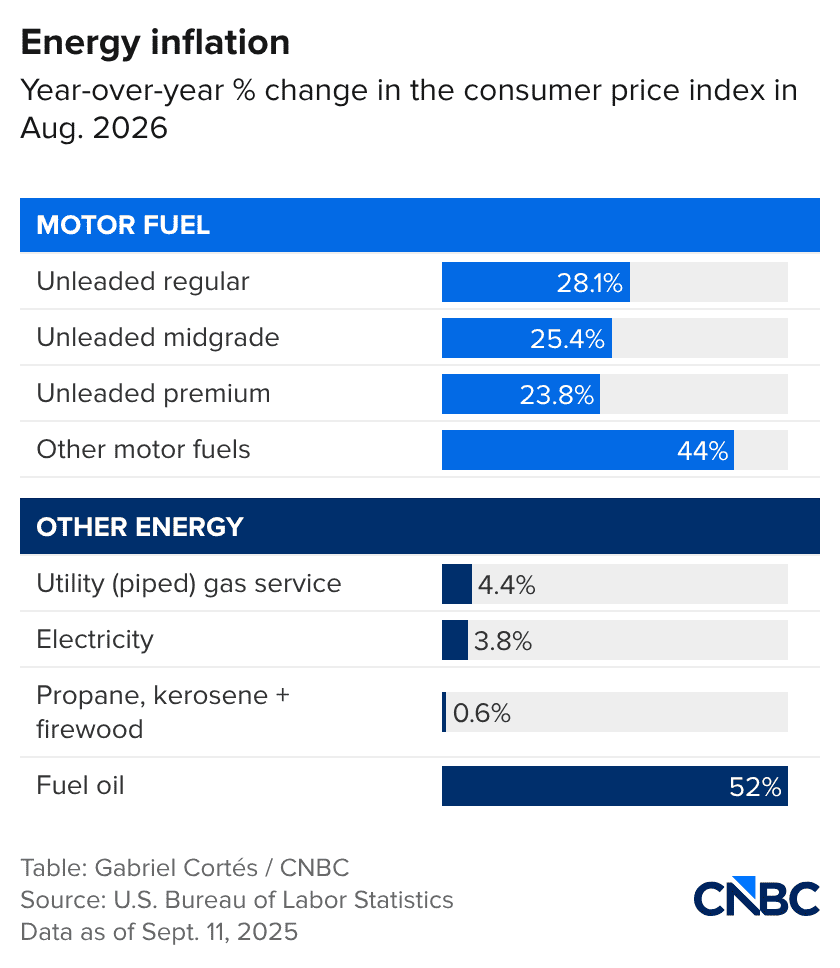
In the US, consumer prices in September rose by 3.7%, with gasoline up by 34.3% and fuel oil more than twice that - 74.2%. The more than 30 million Americans depend on oil to heat their homes and businesses will have to pay heavily this winter.
Are wages keeping up? UK wage growth is heavily favoring the public sector, where more than 6 million people work. More than 81% of UK workers are in the private sector. Public sector pay in August rose by an average of 6.1% but in the private sector it rose much slower, just 2.8%.
British prices have nearly tripled in the last 37 years. Fiat currency - the Pound in your wallet - today can only buy a third of what it could got in 1989.
The UK's current Prime Minister, Andy Burnham, commented on August's inflation figures. He said the British economy is "resilient". That might have raised a hollow laugh from some. The UK economy is moving slower than molasses in January - growing by just 0.4% in July. Today there are almost 1 million British 16-24 year-olds not in employment, education or training - 13% of that age range. More than one in five people are now economically inactive.
The UK economy has sunk into stagflation, almost without notice. The Bank of England (BoE) expects UK inflation to rise above 4% in 2027.
America's central bank - hawkish or not?
The US is clearly destined for higher price rises, most of which are energy related.
The Federal Open Market Committee (FOMC), which sets interest rates, has decided to fight this threat. It last raised US interest rates by 0.25% to 3.75%-4%. The FOMC declared: "The Committee will deliver price stability." The gold price slid $34 on the news; that it didn't lose more was due to the wide expectation that the FOMC would act as it did. Gold is now more than 20% lower than its record price of more than $5,500/oz in January.
With the FOMC members voting almost unanimously for this hawkish stance it also looks certain that rates will rise further this year. Like the BoE, the Fed aims to fix inflation at 2%/year, but it now doesn't expect to achieve that target until 2029. Inflation in the US since 1989 has been very similar to that of the UK.
Driving inflation are the price increases in energy. The pump price of diesel in the US has dropped to around $4.36/gallon, down almost $2 from its peak, thanks largely to the US deal with Russia to import diesel. But that's still a Dollar more than the average price in January. US trucks carry more than 70% of the total value of US goods - the higher diesel price will push up almost all prices.
The US exports more total energy than it imports but it still imports heavy crude oil, and prices are set on a global basis. The US Strategic Petroleum Reserve is now 30% lower than last year. Middle East oil supplies are sporadically interrupted by conflict, pushing up oil and oil derivatives prices.
Wage growth in the US is averaging 3.1% in the private sector and 4.1% in the public sector, slower than in previous years.
What the US shares with the UK is fiscal mismanagement. In the UK total spending by government has gone up almost 10% since 1995 to almost half of gross domestic product (GDP). The UK's national public debt has now surpassed £3 trillion, higher than at any point since the 1960s. That debt is now almost 94% of the country's gross domestic product (GDP) - what the government owes makes up almost all of what the country produces.
The UK's debt however is a minnow compared to America's $40 trillion. The US government spends about a quarter of its GDP.
But both are spending huge amounts on paying interest on debt. In the UK more than 8% of total public spending - around £110 billion - annually goes on interest payments. In the US 15% of the national budget goes on interest payments.
The US is spending $3 billion a day (a record 18.5% of total federal government revenue) in interest payments on its national debt. Borrowing costs for both countries have surged.
The high borrowing and high costs will very soon have an uncomfortable impact. America's Social Security primary trust fund will be depleted by 2032. All beneficiaries will face automatic benefit cuts of 22%..
The end of October will be fascinating - and possibly distressing. We have another meeting of the FOMC (the Federal Open Market Committee, which sets US interest rates) and a UK Budget. The FOMC is not expected to raise interest rates at its meeting of 27-28 October but gold is unlikely to flourish, as it probably will raise rates at its December meeting. The UK's Budget is unlikely to deliver any radical policies. Both the US and the UK don't want to alarm the electorate.
This transatlantic puppetry is heading for a serious crisis. Neither country can sustain the cost of its huge debt load. Whatever the governments choose to solve this problem will give gold fresh impetus.
As higher inflation tussles with higher interest rates, gold as an asset - especially one that can be used as money that is not debased, as with Glint, will become even more important.
For UK clients: At Glint, we make every effort to demonstrate a balanced conversation between gold, silver, crypto and fiat currencies when it comes to purchasing power and, while we strongly believe that gold is the fairest and most reliable currency on the planet, we need to point out that it isn’t 100% risk free. While we have seen a steady increase over time, the value of gold can fall, which means that its purchasing power can also decline.
For US clients: Graphic representations of value are for illustrative purposes only. The Glint debt card is issued by Sutton Bank, member FDIC. The sale, purchase and storage of precious metals are offered by Glint and not Sutton Bank. Your investment in precious metals through Glint is
· Not insured by the FDIC.
· Not a deposit or other obligation of, or guaranteed by, Sutton Bank.
· Subject to investment risks, including the possible risk of loss of the principal amount invested.
All investments involve risk, including possible loss of principal. The value of precious metals is affected by many economic factors, including but not limited to the current market price, demand, perceived scarcity, and quality of the precious metal. Precious metals can increase or decrease in value. Past performance is not a guarantee of future results. As such, investing in precious metals may not be suitable for everyone.