The Fed v. China

The Dollar price of gold dropped by about $55 this week. The price fell more than 6% in September.
Once again, China's central bank bought the dip. The People's Bank of China (PBoC) acquired around 23 tonnes in September. That's its biggest monthly addition in three years, and the 23rd successive month of buying.
Over the past year gold is now about 2% higher, but 15% down for the last six months.
Why has it fallen so much? Is gold's bull run finished?
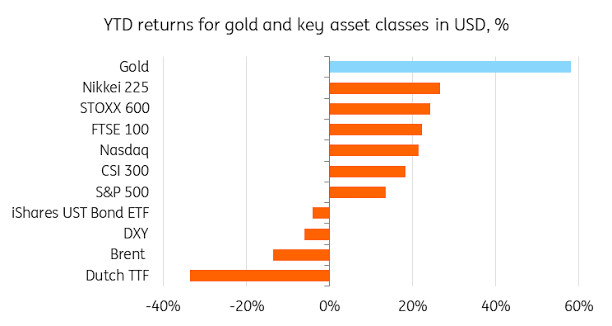 Gold's 2025 price surge
A noisy market
There are as many voices crying 'buy now, gold is going higher!' as there are 'the gold crash has started. Sell now!' Keeping the noise out is essential for gold holders.
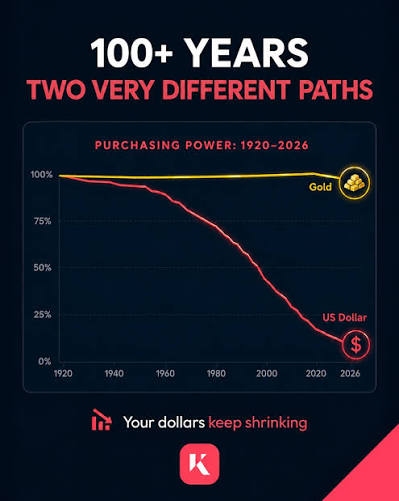
There is one fundamental reason for holding gold. That reason transcends all talk of higher or lower prices. As your fiat currency loses purchasing power thanks to inflation, there's one asset that has proved over centuries that it remains a safe haven. That asset is gold.
Holding gold is an insurance. Gold is nobody's liability. That means it is impervious to government decisions. It can't be defaulted or inflated away. Counter-party risks are commonplace. If you hold bonds or stocks the risk is that the bond seller may fail to pay or that the stocks may entirely collapse.
It's commonly thought that banks or building societies are safe places to store wealth. The financial collapse of 2008 shredded that illusion.
The new annual mine supply of gold adds a very small percentage to the existing above-ground stock - gold can't be diluted. On the other hand, every government has its own money printer.
In times of banking stress or anxiety about government debt, investors need to find something stable, secure, personally controlled. A secure place to live is that ultimate defense. Gold is a place to park your surplus wealth. And when gold can be used to buy your daily needs, as with Glint, owning gold means you also own real money.
It's a piece of string
Gold can be very volatile in the short run, as we have seen.
When real interest rates rise the price can sharply drop. Gold pays no interest or dividends so higher interest rates push higher the opportunity cost of holding it.
The current price drop reflects the anxiety many investors have about the future plans of the Federal Reserve. Will it again raise interest rates this year? The expectation is that the Fed will leave rates where they are - 3.75%-4% - having unanimously pushed them up by 25 basis points in September, the first rise since 2023. A further rate rise is expected at this year's final meeting, in December.
There are more variables to the rate rise question than there are McDonald's. The continuing war/no war in Iran increases/decreases all oil and oil product prices on an almost daily basis. President Trump wants to see US interest rates much lower. His appointment as the Fed's governor, Kevin Warsh, seems intent on preventing inflation from getting out of hand. France is suffering massive protests, nominally over school conditions but actually much more related to the cost of living. Economic growth across most of Europe is very poor, and the government bonds of many countries are reaching dizzying heights, pushing up the cost of mortgages and government borrowing.
For those who bought gold for the short-term, the December meeting of the FOMC (the Federal Open Market Committee, which sets interest rates), will either please or depress them. High rates will mean gold prices will be pushed down as investors avoid the opportunity cost of holding gold.
But there are at least two reasons why that short-term reaction will be futile. Keep an eye on central bank gold buying, particularly China's. China is playing a very long game.
At the same time, governments debts will not stop growing, and paper money will continue losing purchasing power. In retrospect, gold's price move since its 2025 days of glory, when it rose by 64%, will be seen as a sharp correction, not a collapse. As to where the price will be by Christmas, it's anyone's guess. That's why holding gold is for the long-term, as insurance against the unknown, the impossible, the outrageous. All of which may be closer than imagined.
For UK clients: At Glint, we make every effort to demonstrate a balanced conversation between gold, silver, crypto and fiat currencies when it comes to purchasing power and, while we strongly believe that gold is the fairest and most reliable currency on the planet, we need to point out that it isn’t 100% risk free. While we have seen a steady increase over time, the value of gold can fall, which means that its purchasing power can also decline.
For US clients: Graphic representations of value are for illustrative purposes only. The Glint debt card is issued by Sutton Bank, member FDIC. The sale, purchase and storage of precious metals are offered by Glint and not Sutton Bank. Your investment in precious metals through Glint is
· Not insured by the FDIC.
· Not a deposit or other obligation of, or guaranteed by, Sutton Bank.
· Subject to investment risks, including the possible risk of loss of the principal amount invested.
All investments involve risk, including possible loss of principal. The value of precious metals is affected by many economic factors, including but not limited to the current market price, demand, perceived scarcity, and quality of the precious metal. Precious metals can increase or decrease in value. Past performance is not a guarantee of future results. As such, investing in precious metals may not be suitable for everyone.